P2P crypto in Hong Kong mostly means one place: the HKD market on Binance P2P, where you pay a stranger by FPS or bank transfer and the platform releases the coins from escrow. It works, and it is often cheap. But Binance is not licensed in Hong Kong, most rival P2P desks block Hong Kong users outright, and the biggest risk is not the coins at all: it is your bank account being frozen because the money you received was stolen.
This page covers which platforms still serve HKD, what the payment labels really mean, how bank freezes and money-mule cases happen, where the law stands, and a practical checklist if you still decide to trade peer to peer. If you only want to buy your first coins, jump to the safer alternatives, or read our comparison of SFC-licensed exchanges in Hong Kong.
How P2P crypto works in Hong Kong
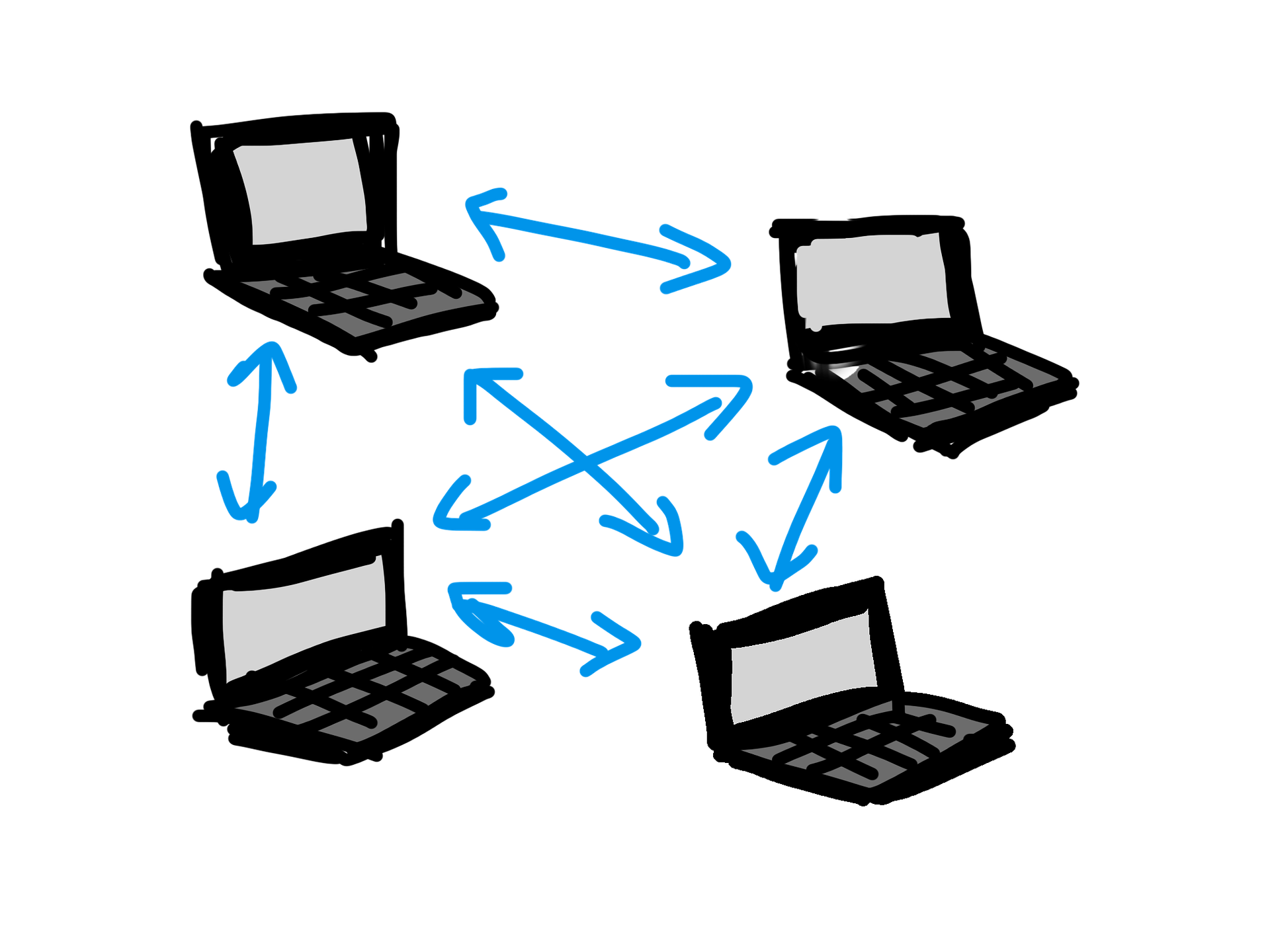
A P2P desk is a notice board with an escrow. Merchants post ads: "selling USDT at HK$7.83, FPS only, HK$1,000 to HK$50,000". You pick an ad, the platform locks the seller's coins, you pay the seller directly from your bank, and when the seller confirms the payment the coins are released to you. Selling runs the other way: you lock your coins, the buyer sends HKD to your account, and you release.
The platform never touches the Hong Kong dollars. That is the whole point, and the whole problem. On Binance, takers pay 0% P2P fees, so the cost is the merchant's spread above the spot price. Full platform identity checks apply, and serious merchants usually insist that the name on your bank account matches your verified name. But the platform cannot tell you where the other side's money came from.
When you buy crypto in Hong Kong this way, you are exposed for a brief window: after you pay but before the coins are released. When you sell, the exposure lasts much longer: the HKD in your account may turn out, weeks later, to be the proceeds of a fraud. Most of what follows is about that second risk.
Which P2P platforms serve Hong Kong: Binance P2P and the rest
Since 1 June 2023 anyone running a virtual asset platform in Hong Kong, or actively marketing one to Hong Kong investors, needs an SFC licence. Platforms that had not applied by 29 February 2024 had to close their Hong Kong business by 31 May 2024. Several of the biggest names withdrew their applications that spring, and their terms of service now list Hong Kong as a restricted or excluded location. That knocks out their P2P desks too.
| Platform | HK licence status | HKD P2P for HK residents? |
|---|---|---|
| Binance P2P | Never applied; not on SFC list | Active HKD market; access is a grey area |
| OKX P2P | Application withdrawn 24 May 2024 | No: HK is a Restricted Location |
| Bybit P2P | Withdrawn 31 May 2024; SFC alert list 14 Mar 2024 | No: HK is an Excluded Jurisdiction |
| KuCoin, Gate, MEXC, HTX | Never applied or withdrawn; MEXC on alert list | No: HK restricted in terms |
Binance is the odd one out. It never applied for a licence and has no Hong Kong entity on the SFC register. Its website says its products are "not intended for individuals in Hong Kong", yet DL News was able to sign up with a Hong Kong phone number and address in June 2024, and Binance's current terms page makes no Hong Kong-specific reference. Derivatives have been closed to Hong Kong users since 2021. Some forum users say Binance no longer offers P2P for Hong Kong, while P2P aggregators still showed an HKD market in 2026; those reports conflict, so check for yourself and assume the position can change without notice.
Whatever the current screen shows, the legal point is fixed: none of these venues is licensed by the SFC, so there is no investor protection, no compensation arrangement and no Hong Kong regulator to complain to. The SFC's suspicious platforms alert list is worth checking before you trust any site, especially since look-alike domains impersonating licensed brands have multiplied in 2026.
Payment labels: FPS, bank transfer, AlipayHK, WeChat Pay and PayMe
Browse the HKD ads and you will see the same handful of labels: "Instant Transfer" (FPS, 轉數快), bank transfer, AlipayHK, WeChat and PayMe. They are not equal.
FPS and bank transfer are the backbone of Hong Kong P2P. They settle in seconds, and they leave a clean trail from one named account to another, which is exactly what investigators follow when a scam victim reports a transfer. AlipayHK and WeChat Pay have long had policies banning crypto-related payments and say they monitor OTC-type transfers. The labels still appear on P2P ads, but paying through them can breach the wallet terms and get the wallet closed. PayMe, the HSBC wallet, shows up on Binance P2P too; we found no PayMe-specific crypto clause, but it is not a funding method at any licensed platform we checked. Cash meet-ups arranged through P2P or Telegram add robbery and counterfeit-note risk on top, which our USDT to HKD guide covers in detail.
Card issuers are a separate layer. Some block crypto merchant codes, and HSBC blocks credit-card crypto purchases globally, which is one reason P2P grew in the first place.
Bank freezes, money mules and the "black money" problem
This is the section that matters most if you sell crypto for HKD through P2P. In August 2022 Hong Kong users reported BOCHK, ZA Bank and other banks closing or freezing accounts after Binance C2C trades; BusinessFocus described one user who had more than HK$200,000 frozen after selling USDT via FPS. The usual trigger is "black money": a buyer pays you with funds taken from a scam victim, the victim reports the transfer, and police follow it to your account.
From there the problem grows. Hong Kong police treat lending, renting or selling a bank account as money laundering, and the HKMA's anti-fraud line to the public is simple: don't lend or sell your bank account. In May 2025 police broke up a HK$118 million laundering syndicate that used more than 500 mule accounts; victims' money was withdrawn and converted into crypto at exchange shops, including in Tsim Sha Tsui. Twelve people were arrested and 560 ATM cards seized. An honest P2P seller whose account receives part of such a flow can end up explaining themselves to both the bank and the police.
The scale behind this is large. Police figures for 2025 show online investment fraud losses of HK$3.58 billion, about a third of which involved virtual assets. Banks know P2P is a common exit for that money. The HKMA told banks in April 2023 to serve licensed virtual asset firms on a risk-based basis, so transfers to OSL or HashKey are routine; frequent transfers to and from unrelated individuals are what trigger reviews.
Is P2P crypto legal in Hong Kong?
Trading crypto with another person is not an offence in itself, and it is not illegal for a resident to use an offshore exchange. The SFC's advice, though, is to trade only on licensed platforms, and nothing about P2P is licensed today: neither the offshore platforms' matching services nor individual traders.
The next law will draw a clearer line. The FSTB and SFC's June 2025 proposal for a virtual asset dealing regime, confirmed in consultation conclusions on 24 December 2025, covers all dealing, including OTC and brokerage. Dealers will need HK$5 million paid-up capital and custodians HK$10 million, and there will be no deeming or transition period. Peer-to-peer trading between individuals without an intermediary is excluded. So casually selling some Bitcoin to a friend stays outside the regime; running a stream of P2P ads as a merchant looks much more like dealing. The bill was targeted for 2026 and had not been introduced as of late September 2026. For the bigger picture, see Hong Kong crypto regulation.
P2P crypto safety checklist for Hong Kong
If you still choose to buy or sell crypto P2P, these steps cut the most common risks. None of them removes the bank-freeze risk entirely.
- Trade only inside the platformKeep chat, payment proof and release on the P2P order screen. Anyone who moves you to Telegram or WhatsApp is removing your escrow.
- Match names, every timeThe name on the incoming or outgoing bank account must match the counterparty's verified name. Refuse third-party payments, even from a "family member".
- Check the money has landedConfirm the credit in your own banking app, not a screenshot. Only then release coins.
- Skip wallet payment labelsAlipayHK and WeChat Pay ban crypto transfers. Using them risks the wallet and gives you weaker records.
- Keep sizes small and counterparties fewMany small trades with strangers look like mule activity to a bank. Fewer, larger trades with established merchants look less suspicious.
- Never lend your accountDo not receive or forward money for anyone else, whatever the "commission". That is the textbook money-mule pattern.
- Keep records for yearsSave order IDs, chats and statements. If a freeze comes months later, they are your only evidence.
Safer alternatives to P2P crypto in Hong Kong
For most people, the reason to use P2P was that it was the easiest way to turn HKD into USDT or Bitcoin. That is no longer true. SFC-licensed platforms such as OSL and HashKey take HKD by FPS and eDDA from your own account, so the only counterparty is a regulated company; see our OSL review and HashKey Exchange review. Selling runs the same way in reverse, with HKD paid out to your own bank, which is covered in our guide to selling crypto for HKD.
Bank and broker apps are another route. ZA Bank offers five coins, including BTC, ETH and SOL, through HashKey with no commission and a 0.8% platform fee (HK$15 minimum per order); Mox, which offers BTC, ETH and SOL, is reported to charge 1.25% on its Basic tier; Tiger lists a 0.05% handling fee; Futu runs crypto through its own licensed platform, PantherTrade. Fees are higher than a P2P spread, but there is no stranger in the middle and no dirty money arriving in your account.
Prefer a card to a stranger's FPS?
Online exchanges let you buy with Visa, Mastercard or Apple Pay, with no bank transfer to an unknown individual.
Operating since 2013 · Card & Apple Pay · Registered in the US, Gibraltar and Spain · Why this pick?Offshore exchanges with card payments are a third option, with a clear trade-off. CEX.IO, founded in London in 2013, holds a US FinCEN money-services registration, a Gibraltar DLT licence and Spanish and Lithuanian VASP registrations, and sells crypto by card, Apple Pay and Google Pay with spot fees from 0.15% maker and 0.25% taker. It is not licensed by the SFC; Hong Kong residents contract with its international entity and get no Hong Kong investor protection, and the SFC's recommended route remains a licensed platform.
Large sums are a different game again. If you are moving hundreds of thousands of dollars, a desk from our crypto OTC guide will settle to a named bank account with a written confirmation, and walk-in options are listed on our crypto shops page, with their own risks. Whatever you choose, the principle is the same: know exactly who is on the other side of the trade, and where their money came from.
Frequently asked questions
Is Binance P2P available in Hong Kong?
An HKD market exists on Binance P2P, with FPS, bank transfer and wallet payment labels, but Hong Kong access is a grey area. Binance never applied for an SFC licence, its site says its products are not intended for individuals in Hong Kong, and derivatives have been closed to HK users since 2021. Using it gives you no SFC protection.
Is P2P crypto trading legal in Hong Kong?
Buying or selling crypto directly with another person is not an offence in itself, and the proposed SFC dealer regime excludes peer-to-peer trades between individuals with no intermediary. But offshore P2P platforms are not licensed in Hong Kong, and receiving fraud proceeds through your bank account can expose you to money-laundering investigations.
Why did my bank freeze my account after a P2P trade?
Banks monitor frequent transfers to and from unrelated individuals. If a P2P counterparty paid you with money stolen from a scam victim, the victim reports it, police trace the transfer and your account can be frozen. In 2022 Hong Kong users reported BOCHK and ZA Bank freezes after Binance C2C trades, one with over HK$200,000 held.
Can I pay for P2P crypto with AlipayHK, WeChat Pay or PayMe?
AlipayHK and WeChat Pay have long banned crypto-related transfers, so paying a P2P trade through them can breach the wallet terms and get the wallet closed. PayMe is not a funding method at any licensed platform we found. FPS and bank transfer are the common labels, and they carry the bank-freeze risk.
Which P2P platforms serve Hong Kong users?
Of the big offshore exchanges, only Binance shows an active HKD P2P market, and its HK status is unclear. OKX, Bybit, KuCoin, Gate, MEXC and HTX list Hong Kong as a restricted or excluded location in their terms, so their P2P desks are not open to HK residents.
What is a safer alternative to P2P crypto in Hong Kong?
An SFC-licensed platform such as OSL or HashKey lets you deposit HKD by FPS or eDDA from your own account, with no stranger in the middle. Bank apps like ZA Bank and Mox, and brokers such as Futu and Tiger, also offer BTC, ETH and other large-cap coins through licensed platforms, at higher fees but with regulated custody.
Sources & further reading
- SFC — Lists of virtual asset trading platforms · updated 29 May 2026
- SFC — Suspicious virtual asset trading platforms alert list · checked 30 Sep 2026
- SFC press release 24PR47 — Bybit warning · 14 Mar 2024
- FSTB/SFC — consultation on VA dealing and custodian services · 27 Jun 2025
- HKMA — speech at AML seminar ("don't lend or sell accounts") · Aug 2025
- OKX — Risk & Compliance Disclosure (restricted locations) · updated 8 Jul 2026
- KuCoin — Terms of Use (restricted locations) · updated 29 Sep 2026
- Fintech News HK — HK$118m crypto laundering syndicate · May 2025
- DL News — Binance, Coinbase and Kraken unlicensed in Hong Kong · 7 Jun 2024
Buy without a stranger in the middle
A card or bank purchase on an exchange means your money goes to a company, not to an unknown account that might be a mule.
Operating since 2013 · Card & Apple Pay · Registered in the US, Gibraltar and Spain · Why this pick?